Friday, 23 August 2013

A terrible piece of "work"

I originally was never going to publish this video.  It is hideous and it stands for everything I do not.  Having said, it occurred to me that it is theoretically possible that some people might like it.  That is a weak excuse, however, I do believe that art is a subjective function of a person's being, so if anyone finds it amusing then it has an existentially valid purpose.  People that like it are lucky, and anyone that does not like it can take some small measure of comfort in that I think it is terrible too.

Also, people should re-examine themselves and take a chill-pill once in a while.  I guarantee that if you hate this, you must value and take yourself more seriously than others ever do.  And that makes you stuck up by definition;  http://en.wiktionary.org/wiki/stuck_up


Please watch it, and then forget it.  It will take a lot more to get me to do this again this year.  I'm still traumatized from last year and there are still 2 pending investigations at work relating to sexual harassment, that were as a direct result of the slug.


Sunday, 18 August 2013

How to cut it in our Universe - Rounded Gaia and her bigger sister

When early people looked over the valleys and hills surrounding their neolithic camp sites, they must have wondered what lay beyond the horizon.  Sea explorers of the East Asian Empires, Europeans and perhaps the most daring of them, the Polynesian explorers, must surely have been awed by the mystery and daunted by the seemingly impenetrable line that cut its way across the view from their bows.  We may be at a new frontier today, but horizons, and their mysteries are still before us.  

Pictures of the universe are as breathtaking as they are thought-tickling.  We're at a point where, as those early explorers, we can create the first crude and coarse grained maps representing our view of the observable universe around us.  The shot here (its a CG composite) is from the work done as part of the Two Micron All Sky Survey (2MASS).


Stop and stare...  Each dot is at least a whole galaxy, the size of our own, and many of the dots are clusters of galaxies bunched together by gravity, appearing as just a single glowing speck; together creating these archipelago-like chains of light, glittering on a sea of black velvet. 

The observable universe is the blob of space around us, extending in all directions, that we are able to see with out most powerful space telescopes.  The central position in this blob is us, on the Earth.  Making up our view is the total light that has been able to reach us ever since the beginning of the universe.  As we are not able to observe things before the big bang inflation, and even with light travelling very fast, we are only able to see objects that are up to about 18 billion light years away.  Any further than that and the light from more distant objects has not reached us yet. Our descendants will be able to see further than us, but for the time being this is as far as our technology allows us to explore.  This can be thought of as a cosmic "horizon" that is in 3 dimensions - it is all around us when we look at the sky.  It is similar, and only slightly different to the Earth's 2 dimensional horizon; which is formed by objects being past the brim of our view over the Earth's curvature. 

Obviously such maps are not for use in navigation but as a way of visualizing what is around us and to convey the grand scale of the cosmos.  They are part research tools, part teaching aids and, personally, they are some of the most artistic and humbling depictions of the insignificant fragility of humanity.  What also strikes me is how round they are.  We know that horizons on Earth (or any spherical object) are round, and explorers tended to make maps that had equally rounded edges because of this.  

There is a very definite feeling of ignorance when you come across a map from the ancient world.  It is something about a map being too flat or rounded that suggests that people don't really know the land properly and are just smudging together the bits on the extremities that they don't know about so that it can look convincing at first glance.  They hope that you don't look too close or ask why there seems to be less and less details the further you leave your central point.  Maybe you just live in the most exciting part, and everywhere else is boring, flat and dull, right?  The map below is a perfect example.  


Yes - I'm sure the world really looked like that back then.  Must have been all those pesky plate tectonics moving about in the last 300 years that straightened out all the edges since then...  Antarctica thinks its Pac-Man, apparently; which is also weird. 

Modern technology is a marvel, and yet I can't help feeling that the round shape of the pictures that have been created of the universe seem very similar to what the ancient explorers drew our world as when they simply did not know what lay beyond the edges.  I wonder if our so-advanced maps of the universe will be viewed with similar quaint appreciation, hundreds of years from now?  

The ancient map above is a beautiful snapshot of our history and epistemology.  It is not diminished by its incompleteness, any more than a life is diminished by still being lived.  Instead it gives me hope.  We can learn from our ancestors.  See where they once walked to,  but had yet further to go.  They pressed on, striving for progress, so that we could be able to enjoy the knowledge we have today.  We should hope to be as brave as them - but there is more to it than that.  

Nothing would terrify me more than for there to be no more mysteries, no more for us to learn, nothing else left to discover.  I want to believe that our imperfect view of the universe is not a crack in an otherwise perfect crystal, that it is not an error or a lack of will.  Instead it is the tantalizing and limited view as seen through a keyhole.  Our eyes are pressed against it, straining to see the contents beyond, as we are urged to unlock the door and step though to what awaits us beyond the next horizon.   


Images (C) of A. Bedno and obtained as part of the Two Micron All Sky Survey (2MASS), a joint project of the University of Massachusetts and the Infrared Processing and Analysis Center/California Institute of Technology, funded by the National Aeronautics and Space Administration and the National Science Foundation.


Monday, 5 November 2012

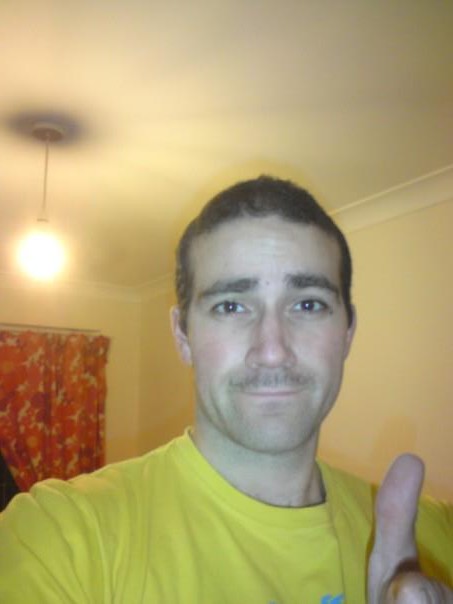
Movember Mistakes... 2012...

Hey guys!  If you are looking for pictures of a suave movember idiot, you have come to the right place.  Visit my MoSpace page at movember.com to see a full gallery, updated daily, of my face fungus fun and to donate to the worthy cause of fighting cancer.  At the end of the month, I will put together the photos from my gallery into a time lapse video for everyone's amusement....

To help support these cancer charities and get involved, why not do more than just donate and actually get involved yourself  - it is not too late to start your movember challenge!!


Sadly, I think I look cool... almost.


Tuesday, 16 October 2012

Quickie Update; Crash Course World History

I have not posted for some time on here, partly because of lack of time and partly, because I have been lazy.  That admission aside, my plan is to make a short plug for a great series I came across today on youtube.

Anyone that has an interest in history, and especially those that don't have time to read up on it, should check out the series Crash Course World History.  These videos are presented by John Green and are fun AND educational, helped both by his snappy delivery and the colourful animations that help to visualise the past.  For those that are either short on time or attention span, the material is highly syndicated from large spans of the world's timeline,  cramming in as much as possible in 10 minutes, while still covering the most important, funny or gory bits.

Check out the video here, or search for "crash course world history" on youtube.


Monday, 17 September 2012

Snappy happy paparazzi fury royalty

I thought that that I would jump on the band wagon and post about the recent photos of Kate, Duchess of Cambridge.  There hasn't been this much discussion over scantily clad royals since we were treated to Princess Leia's slave girl costume in The Return of the Jedi.  This is also an article about irony, which I am sure I will butcher the example of.  


What has really got me angry has been the "non-news" factor of the whole spectacle.  Let's be honest, the grainy photos of Kate (yes, I have done my research) are nothing explicit, embarrassing (in themselves or their context, it's just people chilling out and sunbathing) or in any way "exciting".  I can't help but wonder how much of their "news-factor" has been enhanced by the extreme and vitriolic reaction from St James' Palace itself, trying to sue and decry the press for the photos' existence.  Do not mistake this for a throw away comment - magazines like Closer thrive on the notoriety and public interest in scandal to shift more copies.  They also budget for the need to fight legal cases and pay out settlements - safe in the knowledge that in the end they stand to make a profit that is even greater because of the disputes.  

I am angry because of the fact that the "news" can be hijacked by these stories and the publications that foster them.  Right now there are genuinely news worthy events going on.  For the US, the presidential election season is about to start, the results of which will affect the entire planet.  Meanwhile, in the Arab world people are being killed because of a film that depicts Islam in an unfavourable way - at least the British military has not taken that approach to dealing with the nude photos on the orders of the sovereign (acerbic joke!).  Here in the UK, we are changing the entire education system for our 14-16 year olds, one of the most important educational stages for our children that is a predictor of their chances of moving on to A levels and then University.  Instead we are talking about breasts.  Hysteria over the photos and the damage that they cause has taken on a force of its own that is growing daily.  People have even evoked the memory of Princess Diana to help rebuke the photos.  The shaky logic here is that Diana's death was caused by the paparazzi, ergo any paparazzi interference with her children can be a cause of anguish for them.  That makes sense in the short term but it does not exactly explain how Diana's crash and long range photos of people sunbathing are equivalent.  Unless we are to believe that the royal family break into a sweat whenever a paparazzi is near, regardless of the context. 

Instead we are concentrating on Europe being plunged into legal machinations as the press in Italy, Ireland and beyond is releasing the photos despite the royal family trying to sue them.  This is just plain nuts.  The digital age we live in means that the photos are not going to go away.  Never.  It really does not matter whom you sue.  Or how much money you use to sue them with.  Pressing criminal charges in France might work as a deterrent - France has laws that allows criminal prosecution for invasion of privacy - but this is by no means a solid conclusion.  Ultimately, this will result in a lot of hot air and damages being paid by magazines that can recoup their punishments through increased sales.  

The situation in the UK will likely yield the royals a payout of damages from the press.  The English law of breach of confidence has been twisted by the courts to conform with Article 8 of the European Convention of Human Rights, that gives the right to a private life.  Breach of confidence has been extended to include cases where there has been no pre-existing duty of confidence, as long as the victim has a reasonable expectation that what they were doing was to be kept private.  In this case, the information automatically becomes "private" and this allows the courts to protect the victim by limiting the release of this information.  The exception to this (and thus the operation of freedom of speech) is if the release of the private information is necessary to serve or protect the public interest.  Which brings me onto the next point.

I am not a particular fan of royalties as they fall into the category of oligarchy.  You know, along with, autocracy, Soviet and Sino-communism, dictatorship and fundamentalist theocracy.  That being the case, I will try and be as logical as I can be in this point.  

We often talk about the "public interest" when we discuss free speech and when it is allowed to over-ride the right to privacy.  The public interest is generally not taken to mean what the public is interested in but what is "important" for them to know.  I will ignore the inherent patronisation in this logic and assume, therefore, that in theory a democratic vote of a selection of peers could be used to decide what falls into which category; important to know or mere curious frivolities.  That is fine to conceptualise - knowing that an MP is corrupt is important for their constituents to know, but showing what underwear they have on probably isn't - and we can see that nude photos of royals is not exactly important for the public to know or the UK to function.  The problem I have is that little of what the royalty do in the public eye is actually necessary for the functioning of anything.  Sure it might be traditional, or interesting, but it is not actually needed.  

William and Kate's wedding for instance, served me no purpose and I would contend that the attention and grandeur it was afforded was far in excess of the functional benefit it had to the nation.  Please, lets not go down the route of "it inspired me so much that I am twice the person that I was before".  I don't believe that, and if you do, you need a reality check and to read more on philosophy.  And here is the problem - if most of what we see the royals do is because we are interested in them, rather than in our public interest, then the sensationalisation of their lives becomes the raison d'etre of their continuing publicity and blurs the line between public interest and public entertainment.  I said I would try and be objective about this - I have probably failed.  I cannot argue that curiosity should override the law - what I do contend is that when an institution makes itself a regular public attraction, it becomes harder to know when that life ends, and private life begins.

I really did not care about the photos at all when I first heard of them.  This was simply because I don't care about naked photos of misguided celebrities in general.  What caused me to discuss this at all is the fact that everyone around me seems intent to do this as well!  Due to this fact, I plan on wrapping this up quite quickly.  

This "news" story cheapens journalism by taking time away from important issues in the world that require scrutiny and reporting on.  It also is a hotbed for the erosion of freedom of the press and freedom of speech (see the Mosley v News Group case to see a case where clear questions of personality were raised over a senior industry figurehead yet he was allowed the clemency of the courts).  Lastly it is a sad tale of irony on two counts; one, a vestigial institution that relies on its publicity to generate its support and continued existence yet shies away from the light when it burns too brightly; two, is its desperate attempts to limit the perceived damage to its members when those very efforts continue to perpetuate and grow the facts that are causing the damage itself.


Monday, 10 September 2012

Human development index and the Paralympics

The Paralympics and the Olympics had their closing ceremony today.  Many people have been inspired and entertained by the sporting phenomenon.  It is an even that both serves to motivate those that watch it and on occasion educate and inform as well.  Whether it was seeing the first ever female Olympians from the Kingdom of Saud (regardless of the backroom politics) or Paralympians overcoming adversity.


So this got me thinking.  One thing that can be said is that people with disabilities already face challenges in their lives that others do not have to contend with.  This, to me, makes their stories all the more amazing and incredible.  On this level it does not matter if they can or cannot achieve the same results as the athletes in the Olympics.  It is incredible and awe-inspiring to simply see the spirit with which these people are imbued.  The determination that they have to have to make it past their setbacks and earn the title of athlete.  

Sadly, little of this is free.  The treatment of many disabilities is a costly medical process.  To that end, it has been the case that countries with more advanced medical systems and those with more developed societies have tended to provide better care for those that are less fortunate.  This is where my thinking led me to.  I started wondering if there was any connection between the human development level of a country and the number of Paralympians it had representing it.  

I took data for the number of Paralympians and combined this with the 2011 Human Development Index figures.  I compared this to the top 80 countries in the Paralympics ranked by number of athletes.   This was to remove a large tail end of data, comprising of smaller countries that fielded solitary or only 2 athletes, that would skew the results.  Incidentally, Jamaica being number 84 on this list, was omitted even though it is the home of the Olympics' superstar; Usain Bolt.


And here it is.  Nothing spectacular to be honest, but there is a noticeable increase in the desired direction.  When HDI is taken into account there is a slight increase in the number of Paralympians.  This correlation is relatively weak at 0.31, however, it is made harder to compare the data like for like as the countries have vastly different population numbers.  This can skew the result where a country simply has a larger "resource" from where to find talented and motivated athletes, who simply happen to be disabled in this study.  Performing a natural log on the athlete numbers to partially mitigate the large extremes and outliers actually increases the correlation to 0.39.

Without moving too far in the direction of an after school special, I hope that some of this data is real; and that it shows that increasing HDI does lead to better care of and opportunities for people with disabilities.  


Thursday, 6 September 2012

Fiat money and its effects

This is not so much a full blog post but an addition to my last post regarding the creation and origin of our money supply.  This is a great video narrated by Dominic Frisby from Money Week that explains the negative effects on society caused by the normal & expected operation of fiat currencies (just like our own).

I do not take credit for any of this work but promote you to investigate further and look up Dominic Frisby himself, fiat money and other youtube videos by the uploader of this one, Frizzers.

Enjoy.